10 August 2010

Being an Example to Others

In the library of Secret Harbour is the treatise titled: ‘Alloquia Iesu Christi ad Animam Fidelem’ by Johannes Justus von Landsberg, a German-born Carthusian monk and ascetical writer. He is perhaps best known by the Latin name of Lanspergius. As the title suggests, the treatise was written in Latin and was first published in the year 1610. It is written in such a way that it seems as if Our Lord Himself had written it. Certainly it comes to us from a soul that was very close to Christ. Any disciple of Jesus should certainly feel called to an examination of one’s own walk with Our Saviour. Much of this will be shared here at Secret Harbour. Here is the first instalment.

You should be an example to others, and your life an instruction to those that go astray. The sweet favour of your good conversation ought to be a wholesome medicine for the curing of such as are weakened with the infection of sin, and your words as a consuming fire, to inflame the hearts of those that hear them.

But now you are yourself so corrupted with the desire of childish vanities, so busied with a multitude of unprofitable matters, and so subject to many hurtful passions, as you are distracted in your soul, and have very much polluted it with filthiness, as it is possessed with wandering thoughts and vain imaginations. Self-love reigns in you and until you mortify that, you can never enter into My chamber, or be a partaker of My delights. Thus you, who ought to teach others, stand now in need of being taught yourself.

I write this not to an end that I intend to reject you, but because I would let you know how far you have erred, and I am desirous that you should understand your own loss and danger; and I do not only allure you, but I also urge you forward to return from there, home again unto Me.

09 August 2010

Our Heavenly Mother's Unconditional Love for Us

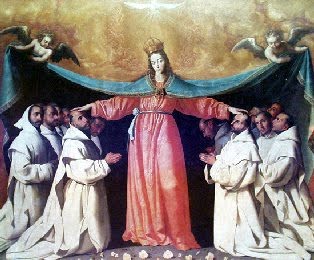
A Carthusian monk, with the help of Saint Bonaventure, describes the power of Mary’s name and how evil fears her.

Mary protects us by renewing our courage. Little by little, she will weaken those evil inclinations left in our nature by sin, those instincts which are stepping-stones to further sin. Above all, she will curb the audacity of our enemies. They cannot endure her presence, and the mere invocation of her name is enough to put them to flight. ‘The powers of darkness’, says Saint Bonaventure, ‘melt away like wax in the warmth of the fire, when they meet anyone who keeps Mary in remembrance and is in the habit of calling on her, and is zealous in imitating her’.

But should we unhappily presume on our liberty to tear ourselves for a moment from her arms and stretch out our hands to Satan, our heavenly Mother would still come to our aid, by preventing this cruel tyrant from exercising over us the power into which our fault has betrayed us, and by forcing him to give us time to gain our pardon.

In a touching allegory Holy Scripture describes this manifestation of Mary’s mercy. The sons of Respha had been delivered up to the Gabaonites, who crucified them. By their bodies, keeping untiring watch to defend their remains from the birds of the air by day and from the beasts of the field by night, was their mother. Nor did she leave them until king David had them taken down from the cross, and had them buried with the bones of Saul and Jonathan his son. Such is the image of Mary, watching over fallen souls, in order to prevent hell from completing the work of their destruction, and ceaselessly drawing upon them the cleansing waters of sorrow and repentance: donec stilleret eos aqua de cælo . . . until there fall upon them dew from heaven.

07 August 2010

Nineteenth Sunday in Ordinary Time

First Reading, Wisdom 18:6-9
To understand this Reading more fully, it would be helpful to go back to the Book of Exodus and peruse the passages found in Chapter 4, verses 22-31, and Chapter 11 verse 4 all the way through verse 14 of chapter 12. While this Reading basically reflects on these verses from Exodus, Wisdom is certainly not to be outdone in providing information as to what these events mean for the future of God's people. These events, although very real in the lives of the Israelites, were as Wisdom teaches us, symbolic -- leading to a divine reality. It was at night that the Israelites watched and waited for the Lord to pass over their houses as their doorposts were sprinkled with the blood of slaughtered lambs. The prophets watched and waited for the coming of the Lamb of God Whose Blood would save His people. Those passages in Exodus tell us that not only were the Israelites required to slaughter the lamb, but they also had to eat it. The reality of this symbolism came to us at the Last Supper and has continued at each and every Mass whereby we consume the Lamb of God's precious Body and Blood. The prophets of the Old Testament watched and waited for the reality or fulfilment. With all this mentioning of symbolism, however, it's important to note that it is only intended as a reference to the rituals of the Old Covenant that would find their fulfilment in the New and Everlasting Covenant. As God's people crossed over from the Old Covenant to the New, there was no rupture. For example, in the Old Covenant ritual of sacrificing a lamb and then eating the lamb, the people of Israel did not eat a symbol of the lamb that was sacrificed, but rather they ate the actual lamb. In the New and Everlasting Covenant, Christ is our sacrificial Lamb; and what we partake of at Communion is not a symbol of the Lamb but instead the Body, Blood, Soul and Divinity of the Sacrificial Lamb Who is Jesus Christ. Keeping watch is still very much a part of our Christian tradition. While the prophets watched for the coming of the Messiah, today monastics, hermits, coenobites and those who adore our Lord in the Blessed Sacrament in the wee hours of the night keep vigil, waiting and longing for the Second Coming of Jesus Christ. Our Lord asks the question: ‘When the Son of Man comes, will He find faith on earth’? (Saint Luke 18:8). Our Savior continues: ‘Watch, therefore; you know not when the Lord of the house is coming. May He not come suddenly and find you sleeping’ (Saint Mark 13:35-36). It's interesting to parallel the first born of the Egyptians being killed with the events at the Garden of Gethsemane leading to Christ's sacrificial act of love. Jesus asked His apostles to keep watch, but they fell asleep. Unlike the Israelites of the Exodus story, the apostles were unable to keep vigil. But in this case it was not the first born of the Egyptians to lose their lives so that the Israelites may be freed from their bondage; instead it was the first born of God Who would be sacrificed so that we may be freed from the bondage of sin and death. But it is the mysterious ways of the Lord that challenge our broken nature. The death of the first born among the Egyptians satisfies a very human desire and longing for revenge – the bad guys got what they deserved. With the crucifixion of Jesus, however, the good Guy is slaughtered so that the heirs of the fall from paradise may have life eternal. In the unseen world, however, the ultimate bad guy, the devil, really had to take it on the chin because Christ broke the stranglehold of death. While being awake and at prayer in the middle of the night is not realistic for most of us, we can still keep watch by fixing our eyes on heaven and staying focused on eternal riches. If our treasure is in heaven, there also will our hearts be (cf. Saint Matthew 6:21).

Second Reading, Hebrews 11:1-2, 8-19
For the human will, faith is the glue that holds everything together. No matter what happens to us in this life, our faith holds firm the belief of a revealed but absent end as well as a future with a new beginning in eternity. There are some biblical examples of faith in this Reading. It is faith that the saints held fast to that has led us to honor them. Let's not forget the Virgin Mary's leap of faith that brought about the radical change in her life which made her the Mother of God. Her leap of faith also changed our lives radically. ‘Yes’ or ‘so be it’ are appropriate synonyms for ‘faith’. Our Lady said yes; Noah said yes; Abraham said yes; Moses said yes; Peter said yes; Paul said yes; all the saints said yes. They all said: Yes, I will do what You ask of me Lord. Yes I believe in You and I trust You; so be it, so be it, so be it! This Reading reveals that Abraham was willing to sacrifice his son Isaac -- even though God promised descendants from Isaac -- because Abraham was committed to a personal faith that believed God would somehow be able to raise Isaac from the dead. Therefore, Abraham said yes. He didn't try to apply logic and figure out how descendants could possibly come from Isaac if he was about to be sacrificed. The Catechism of the Catholic Church teaches that Abraham, because he was strong in faith, became the father of all who believe (cf. CCC 146). The Catechism goes on to add that from God we have received the grace of believing in His Son Jesus, the pioneer and perfecter of our faith (cf. CCC 147). Faith is a gift from the Almighty. It is faith that leads us to our church doors on Sunday. Sometimes it's good to sit back and reflect on the week that just passed. Consider the times you exercised your faith. It's good to do this because so often we use our faith without realizing it. What did you do this past week that required faith? What decisions did you make that required a leap of faith? When you wake up, for example, you have no idea what surprises are waiting for you that could disrupt what you already had planned for that day. Without even realizing it, our day begins with us exercising our faith because we're confident that God will get us through the bumpy road that may lie ahead. We depend on God for so many things and we trust in Him for so many things and yet it is not often in our recollections. All the money in the world can't buy fruits and vegetables if God doesn't first command the seed to grow. By faith this truth is known but seldom, if ever, acknowledged. In the Church's Night Prayer (Compline) we read from Psalm 4: ‘As soon as I lie down, I fall peacefully asleep, for you alone, O Lord, bring security to my dwelling’ (Psalm 4:9). The thought of not being under God's watchful and loving Eyes is rarely ever considered – it doesn't really occupy the human mind unless one is faced with something that is life threatening. It is quite common in the Christian East to pray the ‘Jesus Prayer’. A simplified version of this is to pray the Name of ‘Jesus’ through the rhythm of one's breathing pattern. This not only thwarts off evil because of the powerful Name of Jesus but also is a reminder that God is responsible for each breath we take. If the Almighty turned away His gaze from us for one millisecond, we would cease to exist. Jesus, because He is God, is the only independent Being that has ever walked the earth. In His Human Nature, however, He exercised dependency on the Father to teach us how much we need God.

Gospel, Saint Luke 12:32-48
The words ‘gird your loins’ are familiar to the ancient East. It was their practice to gird up their long garments when they were about to get down to business. And so, what Jesus is saying here is to be ready for His return. In other words, when He returns, will He find us in a state of grace, labouring for the Kingdom, or will He find us drunk, a metaphor for living according to one's own design and not accepting or living out the dignity of a child of God. Both Saint Gregory and Saint Thomas Aquinas explain the watches as such: The first watch is childhood, the beginning of our existence. The second watch is adulthood, and the third watch is referring to old age. Realistically, being prepared for our Saviour’s Second Coming is only part of the story. As a result of our own death, we could meet our Lord face-to-Face before His literal Second Coming. And like the Second Coming, when our time of death will occur is a mystery; therefore, always being prepared is the key. The Catechism explains: ‘Everyone is called to enter the Kingdom. First announced to the children of Israel, this Messianic Kingdom is intended to accept men of all nations. To enter it, one must first accept Jesus' word. This Kingdom shines out before men in the word, in the works and in the presence of Christ. To welcome Jesus' word is to welcome the Kingdom itself. The seed and beginning of the Kingdom are the little flock of those whom Jesus came to gather around Him, the flock whose Shepherd He is. They form Jesus' true family. He urges us to vigilance of the heart in communion with His own. Vigilance is custody of the heart. The Holy Spirit constantly seeks to awaken us to keep watch. This petition takes on all its dramatic meaning in relation to the last temptation of our earthly battle; it asks for final perseverance’ (CCC 543, 764, 2849). Saint Paul is a marvellous example of a heart that was formerly unprepared, and then after his conversion he used every ounce of his strength to prepare the hearts of others. And after his conversion, he had many things happen to him that could easily have convinced him to give up the good fight. Instead his lamp was always shining brightly, prepared to welcome his Master. In his Second Letter to the Corinthians he writes: ‘We do not lose heart, because our inner being is renewed each day even though our body is being destroyed at the same time. The present burden of our trial is light enough, and earns for us an eternal weight of glory beyond all comparison. We do not fix our gaze on what is seen but on what is unseen. What is seen is transitory; what is unseen lasts forever’ (2 Corinthians 4:16-18). Saint Paul points out that the present burden of our trial is light enough; therefore, by fixing our gaze on the unseen we are not running away from the culture -- instead we're bringing heaven's point of view to the culture.

06 August 2010

Only a Purified Mind Contemplates True Beauty

On this feast of the Transfiguration, here are some illumining words from Saint Gregory Palamas.

God manifests Himself upon the Mount, on the one hand coming down from His heights, and on the other, raising us up from the depths of abasement, since the Transcendent One takes on mortal nature. Certainly, such a manifest appearance by far transcends the utmost limits of the mind’s grasp, as effectualized by the power of the Divine Spirit.

Thus, the Light of the Transfiguration of the Lord is not something that comes to be and then vanishes, nor is it subject to the sensory faculties, although it was contemplated by corporeal eyes for a short while upon an inconsequential mountaintop. But the initiates of the Mystery, the disciples of the Lord at this time passed beyond mere flesh into spirit through a transformation of their senses, effectualized within them by the Spirit, and in such a way that they beheld what, and to what extent, the Divine Spirit had wrought blessedness in them to behold the Ineffable Light.

Those not grasping this point have conjectured that the chosen from among the Apostles beheld the Light of the Transfiguration of the Lord by a sensual and creaturely faculty, and through this they attempt to reduce to a creaturely level not only this Light, the Kingdom and the Glory of God, but also the Power of the Divine Spirit, through Whom it is meet for Divine Mysteries to be revealed. In all likelihood, such persons have not heeded the words of the Apostle Paul: “Eye has not seen, nor ear heard, nor has it entered into the heart of man, what things God has prepared for those who love Him. But to us God has revealed them through His Spirit. For the Spirit searches all things, even the deep things of God” (1 Corinthians 2:9-10).

So, with the onset of the eighth day, the Lord, taking Peter, James and John, went up on the Mount to pray. He always prayed alone, withdrawing from everyone, even from the Apostles themselves. In our instance right here and now, having taken only these three, the Lord led them up onto a high mountain by themselves and was transfigured before them, that is to say, before their very eyes.

“What does it mean to say: He was transfigured?” asks the Golden-Mouthed Theologian (Saint John Chrysostom). He answers this by saying: “It revealed something of His Divinity to them, as much and insofar as they were able to apprehend it, and it showed the indwelling of God within Him.” The Evangelist Luke says: “And as He prayed, His countenance was altered” (Saint Luke 9:29); and from the Evangelist Matthew we read: “And His Face shone as the sun” (Saint Matthew 17:2). But the Evangelist said this, not in the context that this Light be thought of as subsistent for the senses. Rather, it is to show that Christ-God, for those living and contemplating by the Spirit, is the same as the sun is for those living in the flesh and contemplating by the senses. Therefore, some other Light for the knowing the Divinity is not necessary for those who are enriched by Divine gifts.

That same Inscrutable Light shone and was mysteriously manifest to the Apostles and the foremost of the Prophets at that moment, when the Lord was praying. This shows that what brought forth this blessed sight was prayer, and that the radiance occured and was manifest by uniting the mind with God, and that it is granted to all who, with constant exercise in efforts of virtue and prayer, strive with their mind towards God. True beauty, essentially, can be contemplated only with a purified mind. To gaze upon its luminance assumes a sort of participation in it, as though some bright ray etches itself upon the face.

We believe that at the Transfiguration He manifested not some other sort of light, but only that which was concealed beneath His fleshly exterior. This Light was the Light of the Divine Nature, and as such, it was Uncreated and Divine. It was to show His disciples that which He already was, opening their eyes and bringing them from blindness to sight. For do you not see that eyes that can perceive natural things would be blind to this Light?

Thus, this Light is not a light of the senses, and those contemplating it do not simply see with sensual eyes, but rather they are changed by the power of the Divine Spirit. They were transformed, and only in this way did they see the transformation taking place amidst the very assumption of our perishability, with the deification through union with the Word of God in place of this.

Let us, considering the Mystery of the Transfiguration of the Lord, strive to be illumined by this Light ourselves and encourage in ourselves love and striving towards the Unfading Glory and Beauty, purifying our spiritual eyes of worldly thoughts and refraining from perishable and quickly passing delights and beauty which darken the garb of the soul.

05 August 2010

When I Say ‘Jesus Christ’

When I call upon the Name of Jesus Christ, in prayer, this is the faith that I profess:

God Incarnate in the human nature of Jesus of Nazareth, in Whom the ultimate subject is the divine Person of the Word of God.

Jesus Christ, the immediate presence of the invisible God in our world of space and time.

The Son, the radiant Image of the Father, eternally engendered by the Father, and Source, with Him, of the Spirit. He is the manifestation of the Father with a human Face, in human history.

A Face that is fully human: the Son accepted the total reality of our human condition – except for sin – with all its finitude, its limits, its succession in time, its subjection to suffering and death. This was the first Sacrifice of Love.

A Face of poverty and, on the human level, of impotence in presence of the forces of destruction and evil, respecting their autonomy and their liberty of action.

A Face of absolute faith and trust in the Father and in His will for the eternal happiness of all humanity.

A Face of love and forgiveness freely bestowed, to the point of sacrificing His life for us in total gift.

The promise of eternal life through a sharing of grace in the life of the Father, the Son, and the Holy Spirit.

Promise realised first of all in Jesus, by His Resurrection from the dead on Easter morning.

Promise realised, in faith, in each of those who believe, by the gift of His Spirit; pledge already here on earth of the divine life of knowledge and love; power within us for living and for acting in the Image of Christ; the bond uniting humankind to form the Church, the Body of Christ, whose sacramental actions are the actions of Christ in the Spirit.

Promise fulfilled in our souls when they come face-to-Face with God in the plenitude of light, at the moment of death, or after a purification; and fulfilled for the totality of our humanity at the end of time; at the Parousia, the Second Coming of Christ, when God will be all in all.

When I say Jesus Christ, I proclaim all this.

~ Interior Prayer: Carthusian Novice Conferences ~

04 August 2010

Intimacy with God

I am not afraid of tiring myself or of displeasing the One I seek in these extravagant efforts of my unsatisfied mind. I have not said enough as to the extent to which the soul that prays must believe in the love of the God to Whom it prays. Yes: prayer is like speaking face-to-Face with God. God and the soul are on the same level: they occupy the same inner chamber. They are like Father and son, the Spouse and His bride, like Friend and friend. The soul's colloquy with God must, then, have one essential characteristic -- intimacy, an intimacy born of the closest family ties. The child sees and loves with the light and love of the Father; he sees what the Father sees. He does not see all that the Father sees, but he sees all that the Father enables him to see. He is happy in that union accorded him by the Father, by which the Father makes him His son, for this union is truly the communication of His own divine life.

This unshakable confidence in the God Who is Love, in the Father giving Himself to souls, is all-powerful. ‘If you shall have faith . . . and shall say to this mountain: Take up and cast yourself into the sea, it shall be done’ ~ Saint Matthew 21:21. ‘They that trust in Him shall understand the truth, and they that are familiar in love shall rest in Him’ ~ Wisdom 3:9. ‘Be of good heart . . . your faith has made you whole’ ~ Saint Matthew 9:22. These are actual assurances from the Spirit of Love; they are beyond question and leave no room for doubt.

This confidence goes very far: it must allow no trial, no delay to affect it. ‘Although He should kill me’, says Job, ‘I will trust in Him’ ~ Job 13:15. It must hold the difficult golden mean between presumption, which would suppress all human effort, and doubt, which, having made the effort, does not really believe in the all-powerfulness of the God Who is Love or in the love of the all-powerful God.

The ardent love of the poor sinner to whom Jesus said: ‘Many sins are forgiven her, because she has loved much’ ~ Saint Luke 7:47; that collective prayer which He assures us is all-powerful with his Father ~ cf. Saint Matthew 18:19; those works of mercy which undoubtedly call down the divine blessing on those who perform them ~ cf. Saint Matthew 25:40; the generous pardon extended to those who have offended against us ~ cf. Saint Matthew 7:22 -- this is what the Holy Spirit is glad to find in the souls of those who appeal to His love. So too, is the conversion of heart which restores us once more to the favour of the good God ~ cf. Psalm 50:14; the recognition of our plight which suffices to keep us in the light and truth ~ cf. Psalm 50:5; the asking again and again, which is evidence of our determined confidence ~ cf. Saint Matthew 21:22; our patience in times of trial and our solicitude for the divine glory ~ cf. 1 Corinthians 10:31 -- it is in such human voices as these that God recognizes His own Voice and responds to it.

~ Dom Augustin Guillerand ~

03 August 2010

Being Exact in the Accomplishment of Spiritual Exercises

This interesting piece from a Carthusian writer perhaps offers us a lesson to be learned, following the example of the Carthusian lay-brothers . . . not becoming overwhelmed or having our duties dictate the direction of our lives.

Carthusian lay-brothers have to sanctify themselves more by prayer than by work. They are true religious, vowed in consequence to the work of their perfection, and obliged by vow always to tend to God by prayer and love. ‘We do not wish’, say the Brothers’ Statutes, ‘that the Brothers should be so occupied with external duties that they should neglect the fulfilment of their spiritual exercises at the times these are due’. Mary should be our model. ‘The Blessed Virgin’, says our Denys, ‘made continuous progress in the contemplative life, and the external work she was obliged to undertake in no way hindered her contemplation. If, however, her union with God was interrupted for a moment for some good cause outside of herself, she at once returned to it with a fervour always more intense’.

If this ideal is too high for our frailty, let us consider a model more on our level, and see how one of Mary’s servants reconciled his devotion and his work in his life as a Carthusian lay-brother. Brother Bruno Lhuillier of the Charterhouse of Bosserville, possessed the gift of piety to a very marked degree. For him, this consisted in conversing with God whenever possible, and in loving Him always. He led on earth – that is, with his body – the life which, in heaven, comprises the beatitude of the Blessed. All unconsciously, he would enter into a state of contemplation wholly angelic; as, for example, when he recited the prolonged Sanctus as the bell tolled before the consecration at the conventual Mass. And he would repeat that same Sanctus often during the day, always with the same result. Another custom of his was to repeat again and again the words Ave Maria. He would say that that was all he was fit for, and this he certainly did to perfection. For indeed, it was the Holy Spirit Who prayed in him, as Saint Paul says, with unspeakable groanings.

Let us follow in the steps of this very loving son of our heavenly Mother, by being exact in the accomplishment of the spiritual exercises.